Visayan Warty Pig Facts
| Site: | Discovery and Learning |
| Course: | Warty Pigs |
| Book: | Visayan Warty Pig Facts |
| Printed by: | Guest user |
| Date: | Wednesday, 6 May 2026, 7:25 AM |
Why are they called warty pigs?
They are not called warty pigs because they are covered in warts!
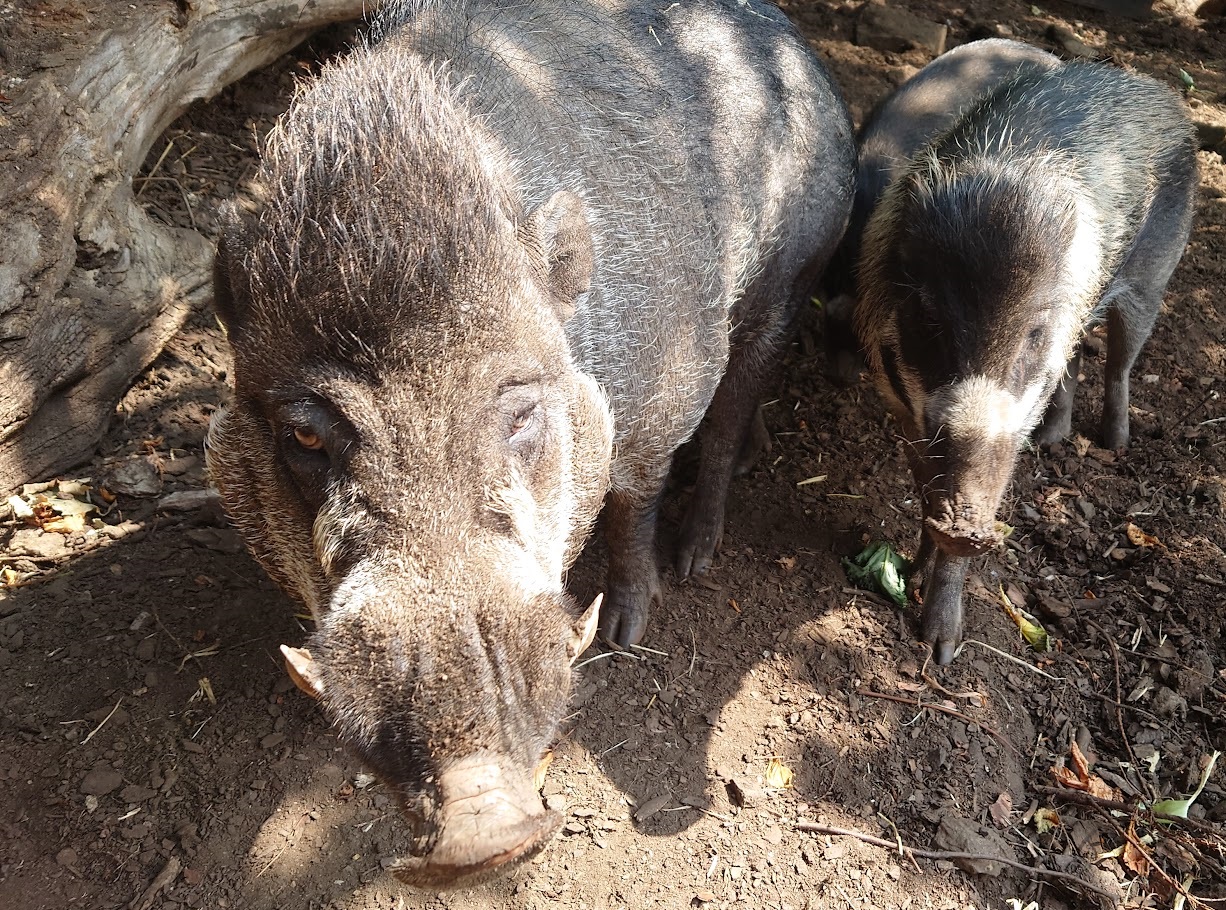
Only males have warts. They can have upto 6 on their face.
They are made out of cartilage and provide a crash helmet if they get into a fight.
If you look at the picture below you can see them on Jacques cheeks.
Are they warthogs?
Warty pigs are not warthogs!
Below is a picture of a warthog:
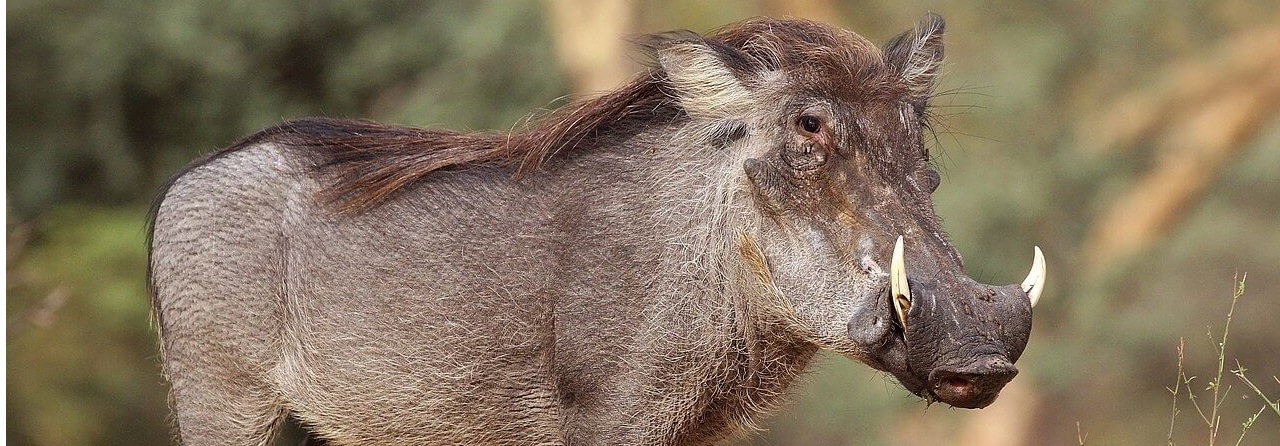
They are two completely different species.
Warthogs are found in Africa, and Visayan Warty Pigs are found in the Philippines.
There are 17 wild pig species found around the world.
They are all part of the mammal family - Suidae.
What habitat do warty pigs live in?
Warty pigs live in forested habitat where they like to live in dense covered areas.
They are black in colour which helps them to blend in.
They have white markings on their face. This is called disruptive camouflage and helps to break up their outline. Piglets are also camouflaged. They are spotty and stripy to blend in to the foliage.
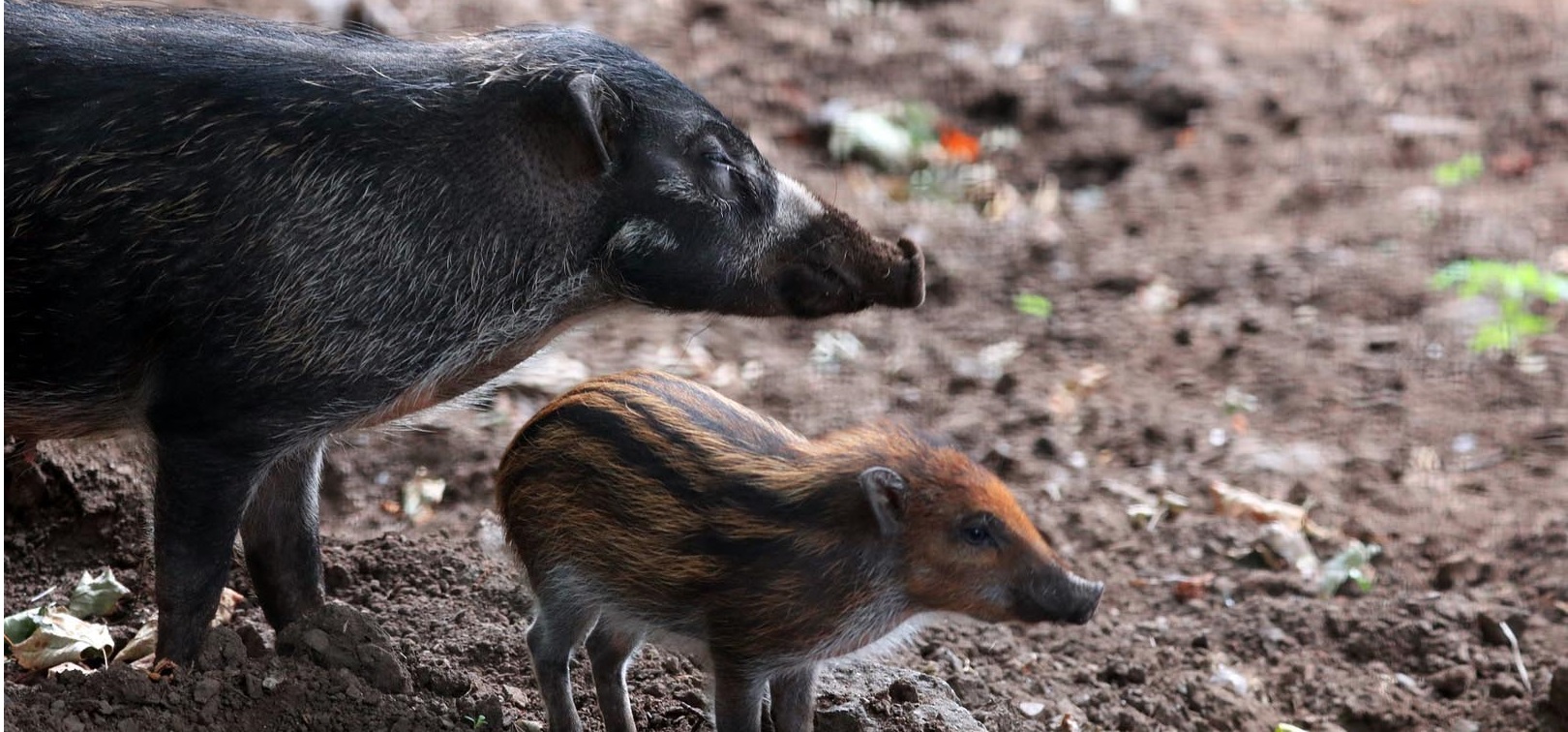
They will occasionally be found in grasslands so long as it is dense enough that they can get cover.
Are warty pigs rare?
Yes Warty pigs are very rare.
They are the rarest mammal we have here at the zoo with an estimated population of around 200 in the wild.
On the IUCN redlist they are classified as Critically endangered.
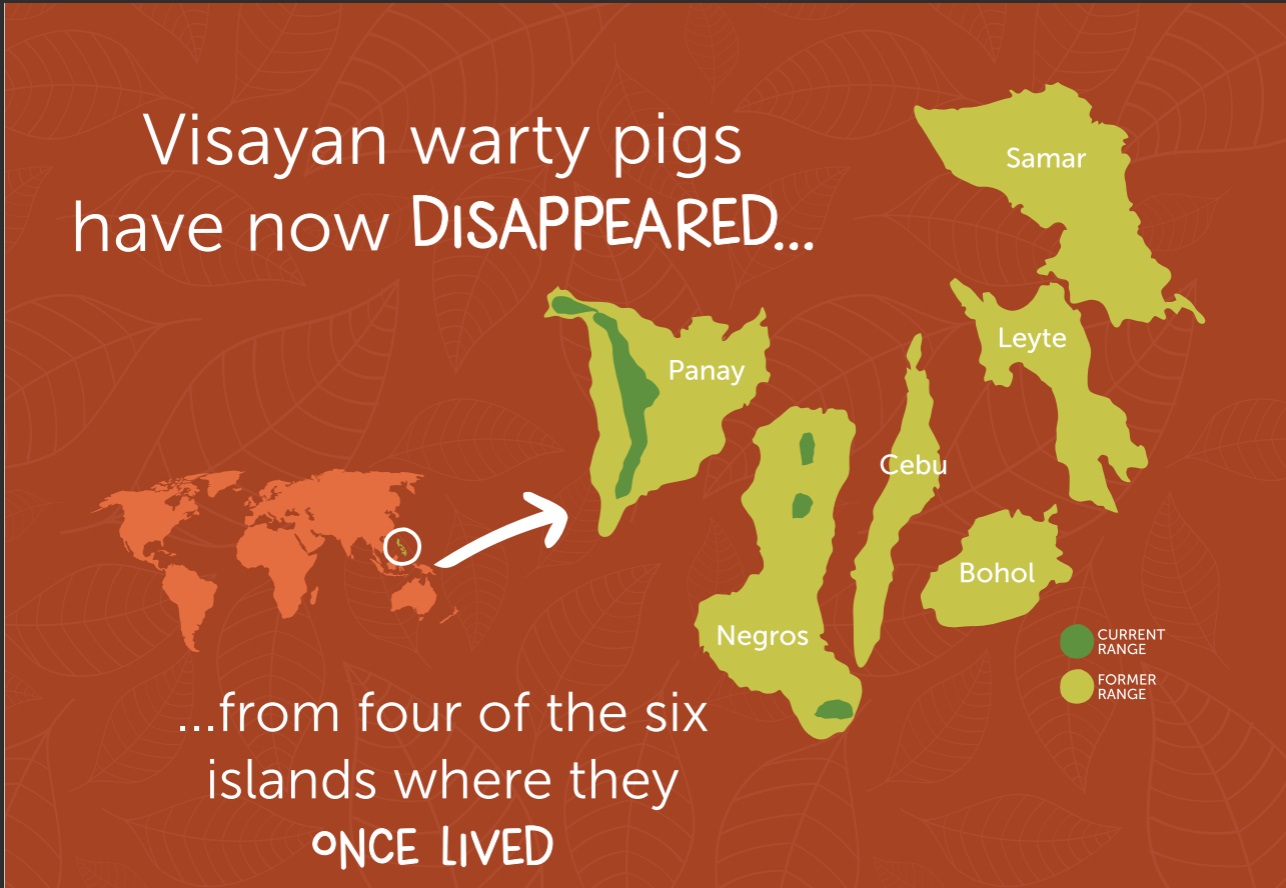
Habitat loss due to human impact has fragmented their habitat forcing them into smaller and smaller areas. Illegal logging and farming means often they chased off and persecuted.
They are hunted too.
Why are they so important in their ecosystem?
Pigs are very important to their ecosystem. They root around which digs up and prepares the soil for plant life.
They are omnivores, which means that they eat a bit of everything including bones!
Eating bones is really important, because they are processing tough nutrients which would otherwise take years to break down.
Eating fruit means they are seed dispersers too.