
Who is involved in the health care of the animals?
"If you are unwell, who would we go and see? Being unwell can be a upsetting, but what if you can't understand or explain it. How would an animal feel in that situation?"
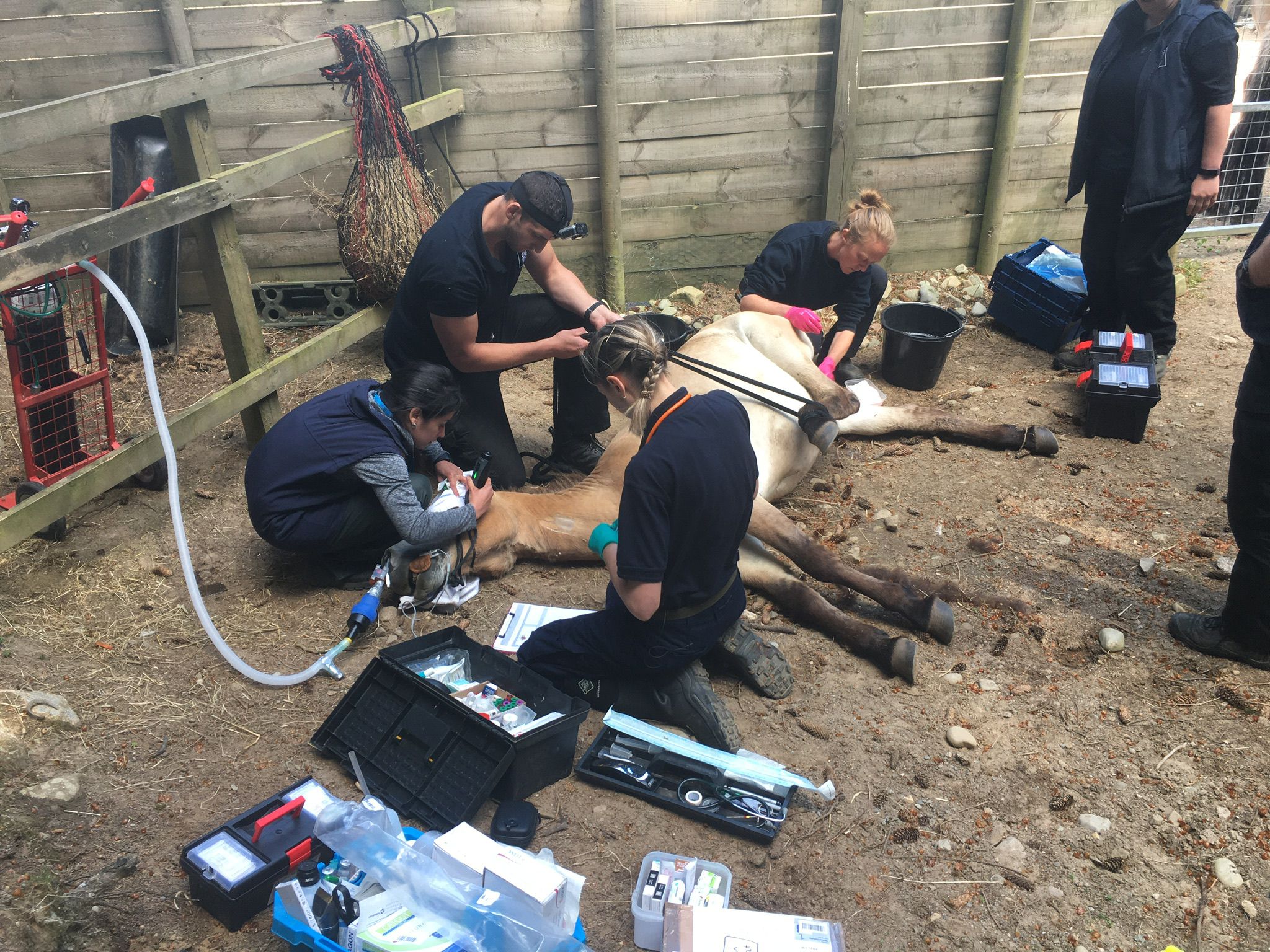
Animal health care is a strategic approach to ensure and maintain the health of the animals in our care. There are many parts to a comprehensive health care programme. These include keepers, the veterinary team, nutritionists, the maintenance department, plants team, curatorial staff, in fact everyone can be considered to have input one way or another in contributing to the health management of a collection of animals. Health care programmes are mainly designed to prevent disease from entering a collection, this is called preventative medicine. The system needs to be adaptable and able to manage disease outbreaks or individual medical cases, which is called reactive medicine.
 In the case of a death, either naturally or by euthanasia (which is the act of deliberately ending a animal's life to relieve suffering), then the health care strategy must incorporate post-mortem investigations and identify the cause of death and potential risk to other animals in the collection. In reality the process is a smooth and a direct programme that consists of multiple other parts.
A zoo’s veterinary service should be seen as a point of contact that will help a keeper to look after the animals in their care. It is very much a group approach between the veterinary team and the keepers with the joint aim of ensuring high standards of animal welfare and health. Keepers and vets cannot function without each other to ensure that successful health care is provided, it requires teamwork and excellent communication. How this is achieved varies considerably between the different types of species and zoological collections.
Watch the video to learn more about the arctic fox and how the keepers look after them at the Highland Wildlife Park.