Improving the mental state of animals in zoos
"You can live your life with your basic needs like food and water, but you need more to be totally happy and healthy. What kind of extra things do you do to keep your mind and body happy and healthy?"
We need to answer this question for animals as well. It is vital to consider an animal’s mental state in every step of their care – from designing their enclosure before they even arrive at the zoo all the way to each daily task like providing their food. One of the main ways we can nurture a positive mental state in an animal in a zoo is through enrichment.
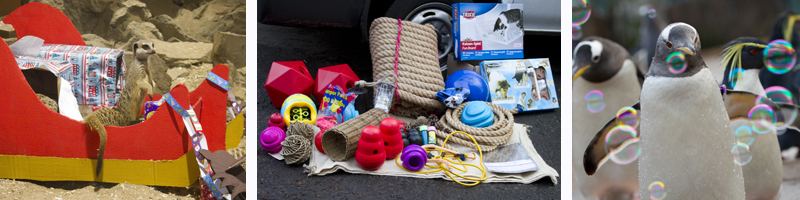
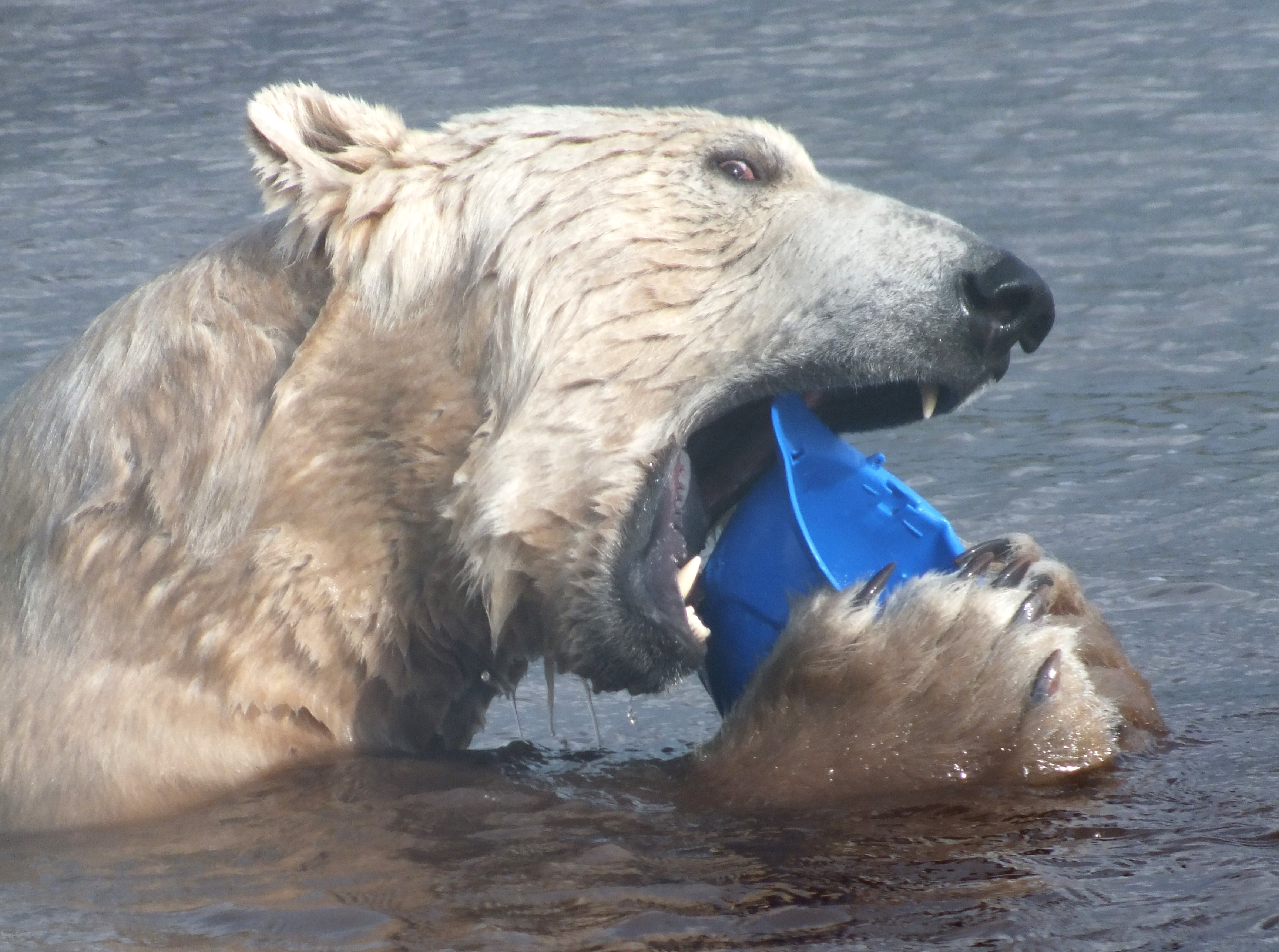 Environmental enrichment is the process of providing stimulating environments for zoo animals to allow them to demonstrate their species-typical behaviour, to allow them exercise control or choice over their environment, which in turn will benefit their mental state. Enrichment won’t be the same for each animal – choosing the right kind of materials and methods for each animal is an important step in making sure the animal will get the most out of the enrichment while being safe.
Some examples of enrichment are feeding devices, play objects, and sensory stimulation. See a whole range of the different types of enrichment we have done at Edinburgh Zoo and the Highland Wildlife Park here.
Animal welfare is an individual and subjective mental state. It is the sum of all mental experiences of an individual at a given time. This mental state is influenced by the interplay between the functional domains of an animal's life, namely: the quality of its nutrition, the physical environment it lives in, its health status, and its behavioural interactions within its physical and social context. Zoos need to show compassion and understanding to animals in captivity and provide a comparable life in captivity as it would be in the wild.
All of these factors may fluctuate in time, leading to changes in overall welfare within a range from good too bad. Regular monitoring is therefore essential for welfare to be managed well. The goal is to achieve a positive quality of life overall, i.e., a favourable balance, by keeping negative experiences as mild and as few as possible and to enable animals to also have positive experiences.
So how can zoos improve the standards of welfare for all their animals in their care?
To expand the activities below by clicking on the expand screen icon