
Topic outline
- Bonnie Beasts of Scotland
- Native Scottish Wildlife
Native Scottish Wildlife

What does 'native' mean?
Native means something comes from a certain place and is naturally found there. It could be a person, plant or an animal! A 'Scottish native' is a plant or an animal that lives or grows in Scotland, and has so done for a long time, it has not arrived from somewhere else.
- Non-native animals or plants might be introduced by people, either accidentally or on purpose.
- Only wild animals are referred to as 'native' or 'non-native', animals like farm animals or pets are called 'domestic' animals.
Can you think of any native animals or plants? Play the native or not game below to test your knowledge!

Why is it important to look after native species?
Lots of our native wildlife is under threat from losing their homes and supply of food, or from hunting. It is important that we look after and protect our native wildlife so that it is there in the future. When an animal is threatened and there aren’t very many of them left, we say that it is endangered.
Many animals that used to live all over the UK are now only found in Scotland. So, if we don’t help to protect these animals, then they might become extinct. This means there would be none of these animals left in Scotland.
We can help these animals by learning about them and telling others why it is important to look after nature and in some cases by creating suitable spaces for them in our own windows, gardens or nearby green areas!
Play 'native or not' and see how many native species you can identify!
Scottish animal fact files
Use the Scottish animal fact file postcards to find out more information on your favourite Scottish animals.
You can print them off or look at them online. You can also play games with them. Try comparing the heaviest or finding species that eat similar foods. You could also play guessing games where one person has to ask questions or act like the animal on their postcard!
Downloadable postcards Online fact files
What's your favourite Scottish animal?
Choose your favourite Scottish animal from the Scottish animal fact file postcards. Then you can record the answers for your favourite animal on this record sheet.Why not go on your own native wildlife safari? You can record the animals you see in this handy booklet.
- Scottish Habitats
Scottish Habitats

What is a habitat?
A habitat is the environment, or place, where different animals or plants live. A habitat will provide all the things an animal or plants needs to survive. This includes:
- Food and water
- Shelter
- Protection
- Other animals that are the same species
There are lots of different types of habitat. Can you think of any examples?
Some animals and plants need very specific surroundings to live in, whilst others can survive easily in lots of different environments.
Habitat deep dive!
Learn even more about different habitats in Scotland and how the animals there are adapted to their environments.
- Food and water
- Polly the Puffin
Polly the Puffin

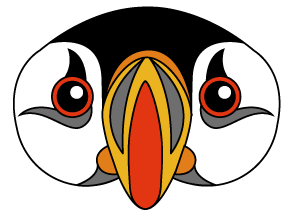
Create your own puffin mask!
You can copy our mask, or print it and colour it in!
Can you act like a puffin along with Polly in the story?
Read all about the adventures of Polly the puffin and learn more about these amazing birds in our interactive story!
- Saving Scotland's Wildcats
Saving Scotland's Wildcats

Wildcats (Felis silvestris silvestris) are Britain’s last native cat species and, as predators, they play an important role in a healthy ecosystem. Also known as the Highland Tiger, wildcats are a different species to our pet, domestic cats. There are key differences between the two species including their size, markings, behaviours, and genetic makeup. Threatened by habitat loss, persecution, and breeding, (or hybridisation), with domestic cats wildcats in Scotland now need our help in order to survive.
RZSS leads Saving Wildcats, a partnership project that aims to prevent the extinction of wildcats in Scotland by breeding and releasing them into the wild.
Spotting a Wildcat
Learn how to spot the difference between a potential wildcat and domestic pet cats with our identification guide.
After looking at the differences between wildcats and pet cats, can you tell which might be wildcats with these photo cards?

Wildcat Art
Can you colour in this Highland tiger?
The Cairngorm village of Newtonmore has an amazing wildcat art trail.
- Beavers are Back
Beavers are Back

Find out all about the amazing beaver and how RZSS has been working to look after them:
Watch our 360 video of a beaver release in Knapdale. You can click and drag around the video to change your view, or if you have a VR headset you can even watch it in virtual reality!
-
Further Activities
- Practice your wildcat ID skills! Can you draw a picture of a wildcat and label it with the important features? Or, you could create a wildcat 2D sculpture out of natural materials like leaves and twigs outside on the playground and add labels in chalk. For indoor options, try the wildcat art challenge or make a 3D wildcat and create a clowder (the collective noun for cats) of wildcats.
- Work with an adult to responsibly use a smart phone and download 'Mammal Mapper' or 'iRecord' apps. These apps ask you to log any sightings of animals, plants or fungi that you see on your local safari's and researchers then use that information to update a big national database about where different species can be found! Over time, this information helps conservationists build up a picture of species that might need help.
- Can you create a special habitat for the native species that live near you or your school? Research which native species live near by and you could plant some native wildflowers for your pollinators, or build a hoverfly pond out of a bucket to help invertebrates!